

The stock exchange is often seen as an indicator of personal confidence, company performance, and investor sentiment. New developments occur daily that can impact stock prices, market indexes, and investment decisions. For investors, keeping an eye on Dow Jones today can provide valuable insights into how the market is responding to economic data, corporate earnings, and global events.
Knowing what’s driving these day-to-day price swings can help investors make better decisions, whether the market is on a strong upswing or downswing. Market fluctuations can be volatile in the short term, but they can be useful to get a better understanding of the overall trajectory of the economy and financial markets.
Why Daily Market Performance Matters
Many investors follow the major stock market indexes because they offer a quick overview of market activity. The Dow Jones Industrial Average is one of the most widely recognised indicators of the performance of the stock market among these indexes.
Today, investors can gauge investor confidence in the Dow Jones with a keen eye. If the level of movement is moving up, it can mean that investors are optimistic about economic growth, as opposed to if they’re moving down, it may mean that investors are worried about inflation, interest rates, or other economic issues.
Active traders aren’t the only ones who care about daily market performance. Trades and other long-term investors, business owners, and financial professionals also use market trends to assess the economy and draw conclusions for business strategy planning.
The Key Drivers Behind Market Movements
The stock market is not a random walk. Every day, several factors impact the market, and sometimes these factors work together to affect investor sentiment as well.
Economic Reports
Economic data is one of the most potent catalysts of market activity. Employment, inflation, retail sales, and manufacturing reports can all have a significant impact on investor expectations.
If, for instance, jobs are increasing, it means that the economy is healthy, which can lead to investors purchasing stocks. However, the opposite can also be a cause for worry regarding higher borrowing rates and lower economic growth with inflation.
Investors look at economic data that has just been released to get a better understanding of why the markets are moving as they do when they are looking at Dow Jones today.
Corporate Earnings Results
Public companies report financial results regularly, in quarterly earnings calls. These reports give an insight into the growth in revenue and profitability as well as expectations for the future.
Good earnings can drive up investor confidence and stock prices. On the other hand, poor stock or index performance could result from a lack of success.
Many of America’s biggest companies are part of the Dow Jones, meaning that earnings reports can affect the index’s performance.
Interest Rate Policies
Central banks are an important part of the financial markets. The interest rates determine the cost of loans for businesses and consumers, and this has an impact on economic growth and business profitability.
Lower interest rates tend to be pro-growth for the stock market because it makes it less expensive to borrow and more expensive to invest. However, when interest rates are higher, spending and investment activity can decrease.
It is for this reason that financial experts pay attention to the Dow Jones today when important declarations from the central banks are made.
Global Developments
The modern financial markets are interrelated. What happens in one region can have an impact on investor sentiment in another region in no time at all.
Several factors, such as geopolitical tensions, developments in international trade, energy prices, and global trends, can influence the performance of the market. Uncertainty can cause investors to move funds into safer investments, and good news can lead to increased risk-taking.
For this reason, there are often daily movements in the key stock market indexes, especially in the global media.
Understanding Market Volatility
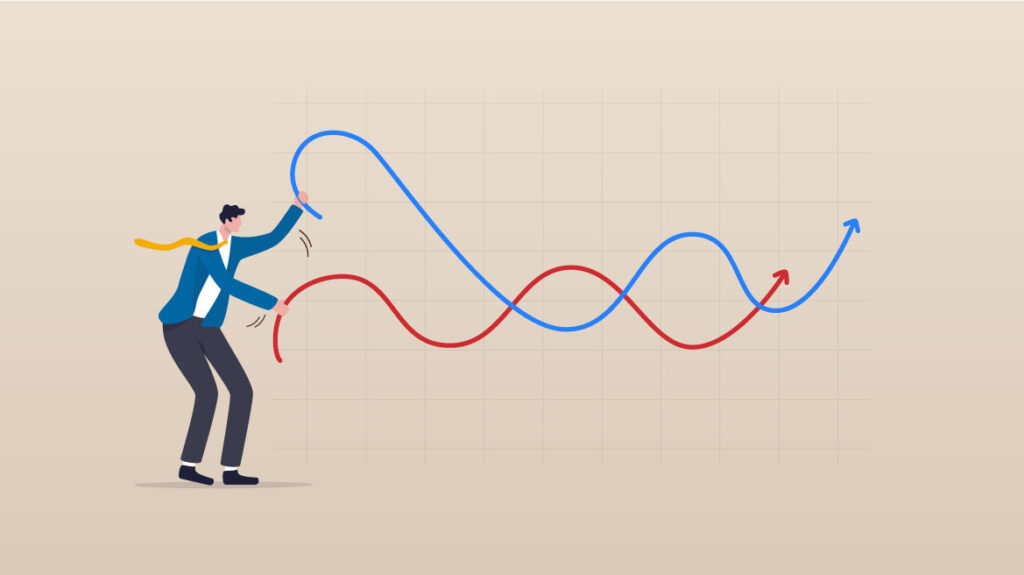
The ups and downs of investing are part and parcel of the game. Stock prices don’t usually go up or down in a straight line, and during periods of uncertainty, they can swing wildly from day-to-day.
Newer investors might find market volatility to be a bit concerning. But, short-term changes can occur for temporary reasons and not for the long-term changes in the economic fundamentals.
While Dow Jones is useful for seeing how investors are reacting to news and events as they happen, it’s also a good idea to have a bigger picture in mind as well. The long-term direction of the market is usually set during a single trading session.
Market volatility has been the norm in the past, and markets have continued to grow over time.
How Investors Can Respond to Daily Market Changes
While market fluctuations can present opportunities, they can also result in emotional decisions. Effective investors are usually not ones who follow the whims of the market by reacting to each and every headline.
Focus on Long-Term Objectives
Adopting a long-term investment horizon is one of the best investment tips. Daily updates of the markets are helpful, but investment decisions should be based on financial objectives and not on the ups and downs of the daily market.
Investors who constantly follow the moves of Dow Jones today could be making decisions based on fear or excitement.
Maintain a Diversified Portfolio
Diversification remains one of the important risk management strategies. Diversifying investments by investing in different sectors, industries, and asset types will help to decrease the risk of any one investment.
A diversified portfolio can help to mitigate the effects of a market downturn and also support long-term growth.
Stay Informed Without Overreacting
Obtaining financial information is easier than it’s ever been. Updates on news, market reports, and expert analysis are provided all day long.
It’s good to be informed, but investors should not be inundated with a barrage of market talk. Knowing the cause of market movements can be more useful than just price movements.
It’s helpful to compare Dow Jones today, but also to look at other economic indicators and investment factors.
The Relationship Between the Market and the Economy
While there is a strong correlation between the performance of the stock market and the overall economic environment, it is not always a perfect match. Often, markets anticipate future growth rather than current growth.
For instance, investors could drive up share prices in the expectation of better economic activity, often before the facts are known. Likewise, when investors have expectations of future difficulties, even when the economy is doing well, markets can fall.
The forward-looking nature makes stock market indexes useful tools for gauging investor expectations and investor confidence.
Why Market Trends Matter More Than Daily Changes
What is important is not just the information you get for each day, but the trend that you see. Patterns that can only be seen over weeks, months, and years in the past can be seen in performance.
Focusing solely on the Dow Jones today could overlook important long-term developments that are impacting the financial landscape. The short-term ups and downs of the stock market can have a smaller impact on investment results than can economic growth, technological innovation, corporate profitability, and demographic trends.
While being aware of daily market activity, investors can also focus on long-term trends to develop a more comprehensive understanding of the financial markets.

Conclusion
Economic reports, corporate earnings, interest rate decisions, and events in the global economy are just some of the variables that can impact financial markets. Today’s Dow Jones market monitoring will provide investors with current market sentiment and insight into what contributes to the day-to-day stock market performance.
But investing successfully is not just about reading the headlines every day. The keys to navigating market uncertainty, taking a longer-term view, diversification, and sound financial principles are all still relevant. Investors can make better-informed and well-informed investments when they take the time to understand how the daily movements of the market relate to the bigger picture of the economy and investments.